Why is 3D Printing Ideal for Mass Production Efficiency?

Time:2026-06-13 Author:Madeline
0%

The landscape of manufacturing is rapidly changing. Among these advancements, 3D printing emerges as a game-changer. It offers unique advantages in mass production. A recent report by ASTM International shows that the global 3D printing market is expected to reach $34.8 billion by 2024. This reflects a growing interest in the technology’s potential across various industries.

Is 3D printing suitable for mass production? The answer lies in its efficiency and versatility. Traditional production methods often involve long lead times and high costs due to tooling and setup. 3D printing, however, allows for quick iterations and customization. A recent study by Deloitte highlights that companies employing 3D printing can reduce production costs by up to 50%.

However, challenges remain. Material limitations and slower build times for large batches need addressing. Still, 3D printing integrates easily with existing workflows. As companies explore this technology, they must weigh these factors carefully. Understanding the balance between innovation and practicality is crucial in shaping future manufacturing processes.
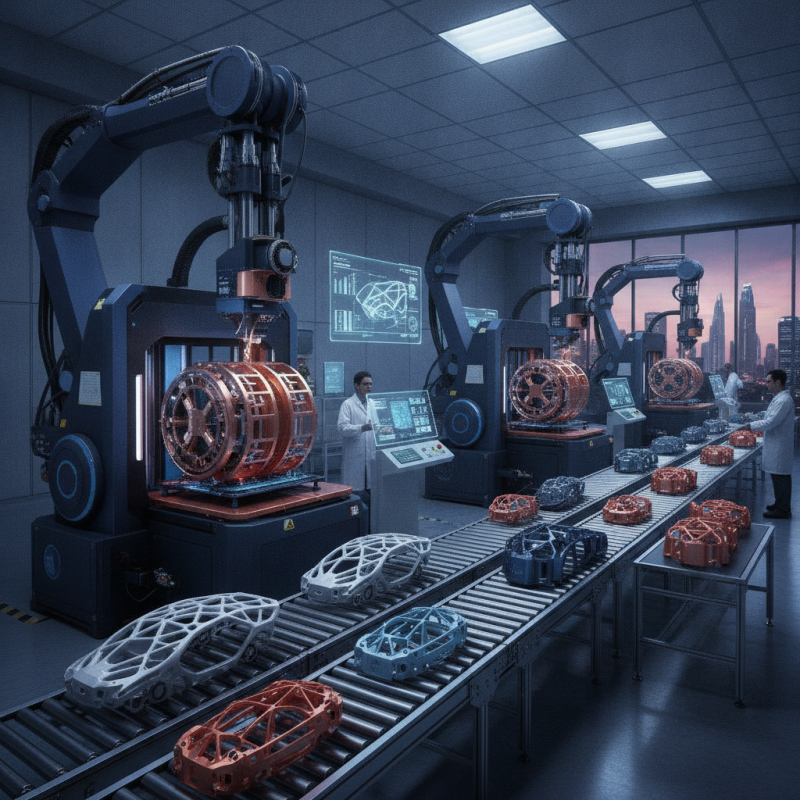
Why is 3D Printing Ideal for Mass Production Efficiency?

Advantages of 3D Printing in Mass Production Efficiency

3D printing revolutionizes mass production efficiency by offering significant advantages over traditional manufacturing. One key benefit is its ability to produce complex geometries. This allows for innovative designs that were previously difficult or impossible to achieve. For instance, lightweight structures with intricate shapes can be created quickly. This not only reduces material waste but also optimizes the end product's performance.

Another important aspect is the reduction in lead times. With 3D printing, the transition from design to production is seamless. Prototypes can be made rapidly, allowing for faster iterations and refinements. Manufacturers can respond quickly to market demands. However, this speed does come with challenges. Not all designs are suitable for 3D printing, and some may require adjustments. Additionally, maintaining quality across large-scale production can be tricky.

Cost efficiency is also a major consideration. Although 3D printing can lower material costs, initial investments in technology may be high. Companies must weigh these factors carefully. As they explore the potential of additive manufacturing, a balanced approach is essential. Embracing this technology demands a commitment to continuous improvement and adaptation.

Why is 3D Printing Ideal for Mass Production Efficiency? - Advantages of 3D Printing in Mass Production Efficiency

Advantage Description Impact on Efficiency
Rapid Prototyping Allows for quick creation and iteration of prototypes. Reduces time to market.
Customization Easily produce customized products without extra costs. Increases customer satisfaction and loyalty.
Reduced Waste Only the necessary material is used, minimizing waste. Lower costs and environmental impact.
Complex Geometries Ability to create complex shapes that are difficult to achieve with traditional methods. Enhances product functionality.
Tooling Reduction Minimizes or eliminates the need for specific tooling. Decreases initial setup costs.

Reduction of Material Waste in 3D Printing for Large Scale Production

3D printing stands out in manufacturing due to its unique ability to minimize material waste. Traditional methods often involve cutting away excess material, leading to discarded parts. In contrast, 3D printing creates objects layer by layer, using only the necessary material. This method optimizes resources, making it particularly useful for large-scale production.

When large quantities of items are produced, even small savings can add up. By integrating 3D printing, companies can enhance production efficiency. With careful design, manufacturers can achieve significant reductions in wasted materials. This is crucial in industries focused on sustainability. However, achieving true efficiency requires skilled operators who understand 3D printing intricacies.

Not every project benefits equally from 3D printing. Certain designs may lead to unexpected challenges. Sometimes, the technology may require trial and error. This can complicate production workflows. Nevertheless, the potential for reduced waste makes it a vital area to explore. Manufacturers must continually assess their processes to achieve optimal results.

Material Waste Reduction in 3D Printing for Mass Production

Customization Capabilities: Tailoring Products on a Mass Scale

3D printing revolutionizes mass production by offering unprecedented customization capabilities. Traditional manufacturing often struggles with rigid design templates and long lead times for custom orders. In contrast, 3D printing can create personalized products quickly and affordably. This flexibility attracts a variety of industries, from healthcare to consumer goods. It allows businesses to cater to individual preferences at a large scale without sacrificing efficiency.

Customization through 3D printing also involves challenges. While the technology enables tailored designs, inconsistent quality can arise. Some products may not meet customer expectations due to material limitations or design flaws. Additionally, understanding customer needs in a rapidly changing market can be demanding. Companies must stay adaptable and continuously improve their design processes.

Despite these hurdles, 3D printing still shines as a powerful tool for customization. Businesses can efficiently modify designs while reducing waste. Enhanced speed and lower costs are undeniable advantages. Brands embracing this technology can create unique offerings that resonate with customers on a personal level. However, reflection on quality control and user feedback is vital for sustaining success in this dynamic landscape.

Speed and Flexibility in the 3D Printing Production Process

3D printing is rapidly transforming mass production. One notable advantage is its speed. Traditional methods may involve lengthy setups and tooling. In contrast, 3D printing can create complex parts within hours. This agility allows manufacturers to respond swiftly to market changes. When demand spikes, adjusting production becomes simpler.

Flexibility also plays a crucial role. Designers can tweak digital files easily. There’s no need for new molds or dies. This adaptability fosters innovation. It encourages experimentation without the fear of costly waste.

However, the technology does have constraints. Not all materials are suitable for 3D printing. Some products may require traditional manufacturing methods despite the allure of 3D efficiency.

The growing trend is clear: 3D printing redefines production workflows. Companies gain a competitive edge by embracing it. However, challenges remain. Understanding the limitations of materials and processes is essential. Amid the excitement, reflection on these challenges is necessary for long-term success.

Cost-Effectiveness of 3D Printing Compared to Traditional Manufacturing Methods

3D printing is revolutionizing mass production. Its unique advantages enhance cost-effectiveness compared to traditional methods. According to a report by the Wohlers Associates, companies can reduce production costs by 30% to 50% through 3D printing. This shift allows for more efficient use of materials and resources.

Another benefit lies in the reduction of waste. Traditional manufacturing often leads to excess material, while 3D printing uses only what is necessary. Industry studies indicate that additive manufacturing generates up to 90% less waste than conventional processes. This not only cuts costs but also appeals to eco-conscious consumers.

Despite these advantages, challenges exist. Initial investment in 3D printing technology might be high for some businesses. Also, not all materials are suitable for this process. Continuous research is crucial to overcome these hurdles. Nonetheless, the trajectory of 3D printing suggests a promising future in enhancing efficiency in mass production.

FAQS

: How does 3D printing reduce material waste?

: 3D printing creates objects layer by layer, using only the necessary material, unlike traditional methods that waste excess material.

What are the benefits of using 3D printing for large-scale production?

It enhances production efficiency and significantly reduces material waste, which is essential for sustainability-focused industries.

Why is skilled operation important in 3D printing?

Skilled operators understand the intricacies of 3D printing, which is essential for achieving true efficiency and overcoming challenges.

Are there challenges associated with 3D printing?

Yes, some designs can lead to unexpected challenges and may require trial and error, complicating production workflows.

How does 3D printing enable product customization?

3D printing allows businesses to create personalized products quickly and affordably, catering to individual preferences on a mass scale.

What quality issues might arise with customized 3D printed products?

Inconsistent product quality can occur due to material limitations or design flaws, potentially leading to unmet customer expectations.

How can companies effectively adapt to changing customer needs in 3D printing?

Companies must stay adaptable, continuously improving their design processes to meet evolving market demands.

What advantages does 3D printing offer over traditional manufacturing?

3D printing offers enhanced speed, lower costs, and the ability to create unique offerings that resonate personally with customers.

How important is quality control in 3D printing?

Quality control is vital for sustaining success, as it helps ensure that products meet expectations in a dynamic market.

What should manufacturers reflect on while using 3D printing?

Manufacturers need to reflect on quality control and user feedback to improve designs and maintain customer satisfaction.

Conclusion

3D printing is increasingly recognized for its suitability in mass production due to several key advantages. One major benefit is the reduction of material waste, which is critical for large-scale production. Unlike traditional manufacturing methods, 3D printing allows for precise fabrication of components, minimizing excess materials. Additionally, the technology offers remarkable customization capabilities, enabling manufacturers to tailor products to specific consumer needs without sacrificing efficiency.

Furthermore, the speed and flexibility inherent in 3D printing processes significantly enhance production timelines and adaptability to design changes. This efficiency, combined with the cost-effectiveness of 3D printing compared to conventional approaches, positions the technology as a compelling choice for industries looking to optimize their mass production strategies. Overall, 3D printing's unique attributes make it increasingly suitable for mass production, revolutionizing how products are designed and manufactured.

Madeline

Madeline

Madeline is a dedicated marketing professional with a wealth of expertise in our company's core offerings. With a keen understanding of the industry, she brings a unique perspective to her role, consistently delivering high-quality content that highlights the superior aspects of our products. As......